Record/Journal/What Photo-ID Actually Tells Us
04 — Journal
2026-07-02What Photo-ID Actually Tells Us
Fifty years of dorsal fin photographs, and why the catalogue is the single most valuable thing we have.
Entry record
- Filed
- 2026-07-02
- Topic
- Photo-ID
- Reading
- 8 min
- Author
- US Orca field team
- Sections
- 3
Notes
A face you can read
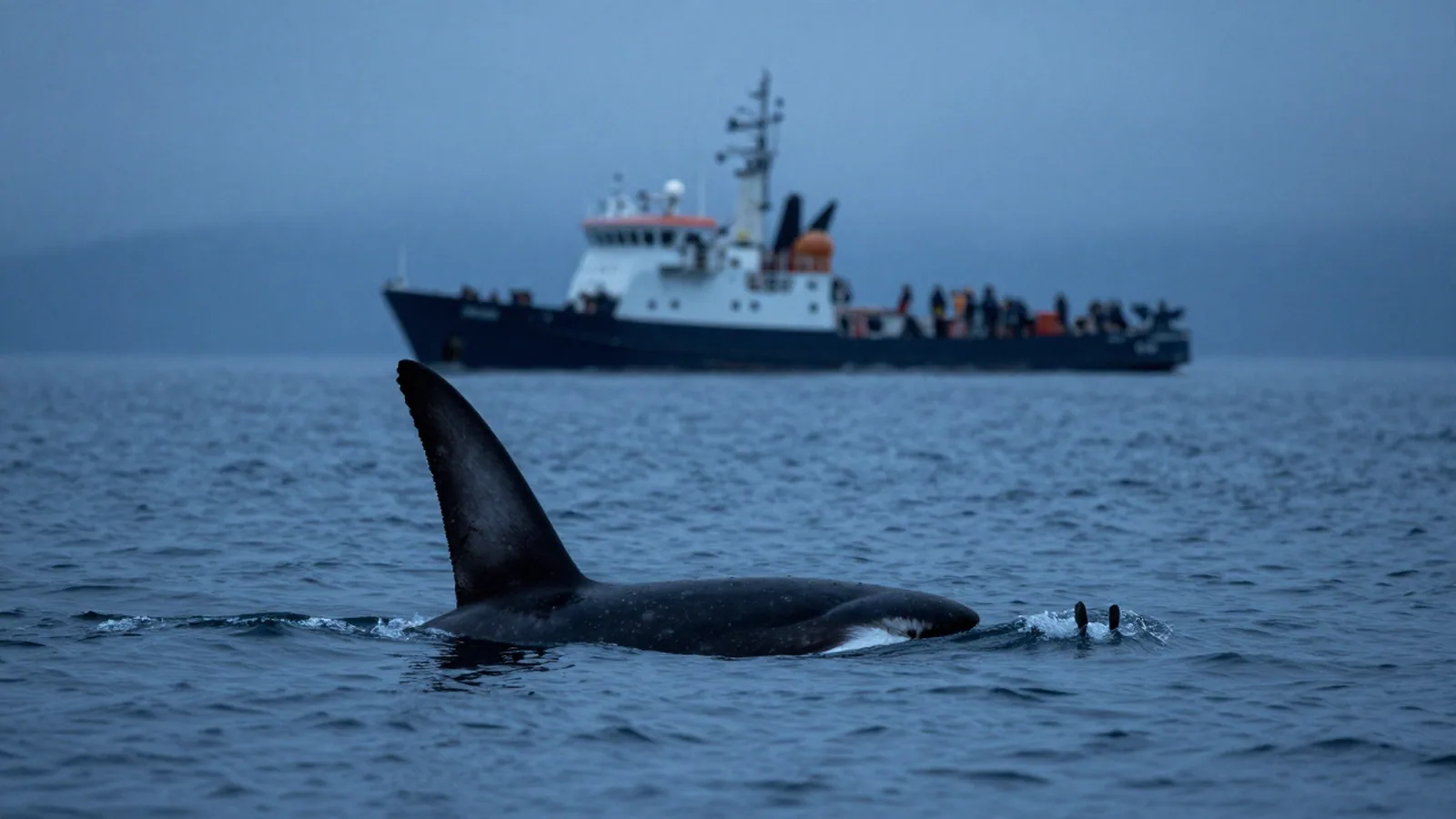
Every orca has a dorsal fin with a distinct outline — nicks, notches, curvature — and a grey saddle patch behind it with a unique pattern. Together they work like a fingerprint, readable at distance with a long lens and no contact with the animal.
The Pacific Northwest catalogue goes back to the early 1970s. That continuity is rare in wildlife biology. We can trace individual life histories across five decades, which means we can ask questions about lifespan, calving intervals and family structure that are impossible in most species.
Absence as data
The catalogue's real power is negative. When an individual is not seen across a full field season, and their family group is seen repeatedly, that is a mortality with a name and a date attached.
That is how we know the population number so precisely. Nobody estimates it statistically. It is a census, done by photograph, by people who can recognise every animal in it on sight.
Where it gets hard
Calves are difficult. Fins are small and unmarked in the first years, so early identification leans on saddle patch and association with a known mother. Some calves die before they are ever confidently identified.
Matching is still substantially manual. Automated matching helps with the first pass, but a human makes the call, because a false match corrupts a fifty-year record.