Record/Journal/Listening Through a Noisy Ocean
04 — Journal
2026-08-19Listening Through a Noisy Ocean
What eight months of hydrophone data says about when the Salish Sea actually goes quiet.
Entry record
- Filed
- 2026-08-19
- Topic
- Acoustics
- Reading
- 9 min
- Author
- US Orca field team
- Sections
- 3
Notes
The array
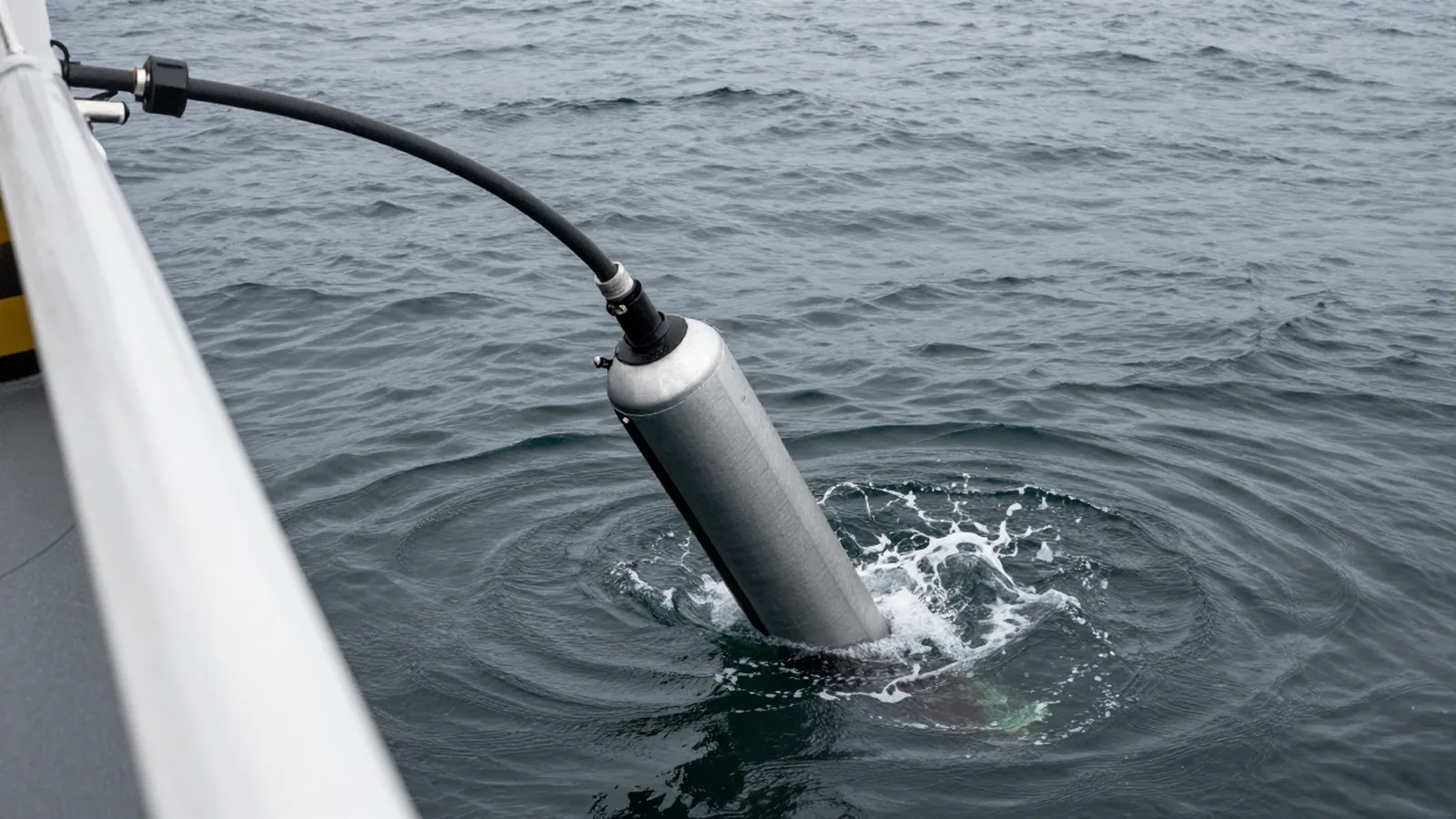
We keep hydrophones moored at three sites and tow a fourth from the survey boat. The moored units run continuously; the towed array only works when the sea state cooperates, which in practice means a few dozen usable days a year.
Continuous recording produces an enormous amount of nothing. Most of the archive is engine noise, weather and the low grind of distant traffic. The whales are a small fraction of it, which is precisely why the background matters.
When it goes quiet
Noise in the bands orcas use drops sharply in two windows: overnight between roughly two and five in the morning, and during sustained heavy weather when small-vessel traffic stays home. Neither window is under anyone's control.
The controllable variable is speed. Across the slowdown period, measured broadband levels at our closest mooring fell meaningfully, and the reduction was concentrated in the frequency range that matters for echolocation rather than spread evenly across the spectrum.
What we do with it
Acoustic data is most useful when paired with something else. On days where we have both hydrophone coverage and visual observation, we can ask whether the whales were foraging or travelling, and check that against the noise floor at the time.
The pattern that keeps appearing is unglamorous and consistent: quieter water, more foraging. It is not a subtle effect and it does not require a new law to act on.